
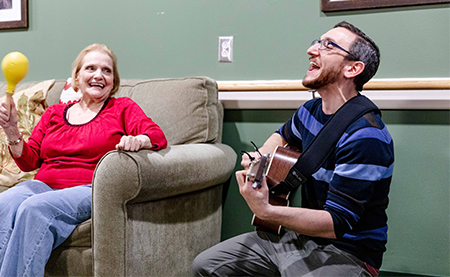
What Is Music Therapy?
Music therapy is a clinical, evidence-based healthcare service provided by credentialed professionals who use music intentionally to support a person’s cognitive, emotional, social, and physical well-being.
Unlike casual music activities, music therapy is designed around individual goals—such as reducing anxiety, improving engagement, supporting memory, or enhancing quality of life. Music therapy can be especially beneficial for older adults and people living with dementia.
It’s important to distinguish music therapy from things it’s often confused with, such as:
- Recreational music activities
- Background or ambient music
- Informal sing-alongs or entertainment programs
While those experiences can be enjoyable, music therapy is therapeutic by design, guided by assessment, clinical training, and ongoing evaluation.
And a key reassurance—especially for seniors and families:
Music therapy isn’t about musical talent. It’s about connection, dignity, expression, and meaningful moments that support quality of life.
How Music Therapy Works (And Why It’s Different From Simply Playing Music)
Credentialed, Goal-Driven, and Evidence-Based
Music therapy is delivered by board-certified music therapists who complete specialized clinical training and follow professional standards of care, such as those established by organizations like the American Music Therapy Association.
Each session is:
- Designed around individual or group goals
- Adjusted based on response and progress
- Informed by ongoing assessment
- Fosters a supportive therapeutic relationship
The therapist is constantly observing: How does this person respond? What supports engagement? What reduces distress? What builds connection?
Why the Brain Responds to Music—Even When Words Are Hard
Music activates multiple areas of the brain at once, including those tied to memory, emotion, movement, and attention. Research shows that musical memory and responsiveness often remain accessible longer than language, especially in aging and dementia.
For many seniors, music can:
- Support mood regulation
- Spark recognition or reminiscence
- Cultivate alertness and engagement
- Provide emotional expression when words are limited
- Encourage movement and engagement
Music therapy can be so impactful in memory care and dementia settings because it meets people where they are, not where we wish they could be.
What a Music Therapy Session Typically Looks Like
A music therapy session is structured, but flexible. It may include:
- Familiar, personally meaningful music
- Singing, listening, rhythmic interaction, or gentle movement
- Opportunities for choice and agency
- A calm, supportive environment with no pressure to perform
- Opportunities for improvisation
Sessions are designed to feel safe, respectful, and empowering—honoring each person’s life experience and preferences.
How Music Therapy Helps Seniors
Music Therapy for Seniors
For older adults, music therapy offers meaningful engagement in the present moment.
Benefits often include:
- Reduced isolation and withdrawal
- Improved mood and emotional expression
- Support for routine, identity, and purpose
- Opportunities for joy and connection in the present moment.
- Creative expression, exploration, and enjoyment.
Positioned correctly, music therapy offers seniors a chance to be seen, heard, and valued.
Music Therapy for Seniors With Dementia or Alzheimer’s
Music therapy is especially powerful for people living with dementia or Alzheimer’s disease. Even as verbal communication declines, music can remain a reliable pathway to connection.
Music therapy may:
- Reduce agitation, anxiety, and distress
- Support emotional expression and recognition
- Create moments of calm, joy, or familiarity
Consistency, predictability, and safety are essential—music therapy provides a structured, reassuring presence that adapts as needs change.
Music Therapy in Nursing Homes and Assisted Living Communities
In senior living and care communities, music therapy supports both residents and staff.
It can:
- Enhance residents’ overall quality of life
- Reduce behavioral stressors and emotional escalation
- Foster shared moments of connection and community
Music therapy functions as a supportive partner, complementing care plans and the culture of the community.
When to Add Music Therapy to the Care Plan
Signs Music Therapy May Be the Right Next Step
Music therapy may be especially helpful when a senior:
- Shows increased anxiety, agitation, or withdrawal
- Has difficulty engaging verbally or socially
- Responds strongly to music—positively or emotionally
- Needs structured, therapeutic support rather than passive activity
Entertainment vs. Clinical Support—Why the Distinction Matters
Entertainment and enrichment programs have value—but they don’t replace clinical, goal-oriented therapy.
Music therapy is appropriate when:
- Emotional or behavioral needs impact quality of life
- Families or staff can bene additional support tools
- Progress and outcomes matter—not just participation
Understanding this distinction helps families and communities choose the right level of care at the right time.
How InVibe Creative Therapy Supports Seniors and Care Communities
InVibe Creative Therapy provides individualized, person-centered music therapy designed specifically for aging adults and care environments, with the goal of bringing present moment joy, expression, and connection.
The approach emphasizes:
- Respect for personal history, culture, and musical preferences
- Choice, autonomy, and dignity
- Collaboration with families and care teams
InVibe has experience working with:
- Seniors
- Dementia and memory care populations
- Assisted living and nursing home communities
Schedule a consultation or try a session.
Music Therapy FAQs
Is music therapy the same as music lessons?
No. Music therapy is a clinical service focused on health, well-being, and quality of life—not musical skill development or performance.
Do seniors need musical experience to benefit from music therapy?
Not at all. Music therapy is about listening, responding, and connecting—not talent or training.
Can music therapy help people with advanced dementia?
Yes. Music often remains accessible even when language and memory decline, making it a powerful therapeutic tool.
Is music therapy covered by insurance?
In some cases, yes. Coverage varies, and providers like InVibe can help families explore available options.
How often should music therapy sessions happen?
Consistency matters. Many seniors benefit from weekly sessions, though frequency depends on individual goals.
How do I know if music therapy is working?
Progress may appear as improved mood, engagement, reduced agitation, or meaningful moments of connection—often shared through therapist updates.
