
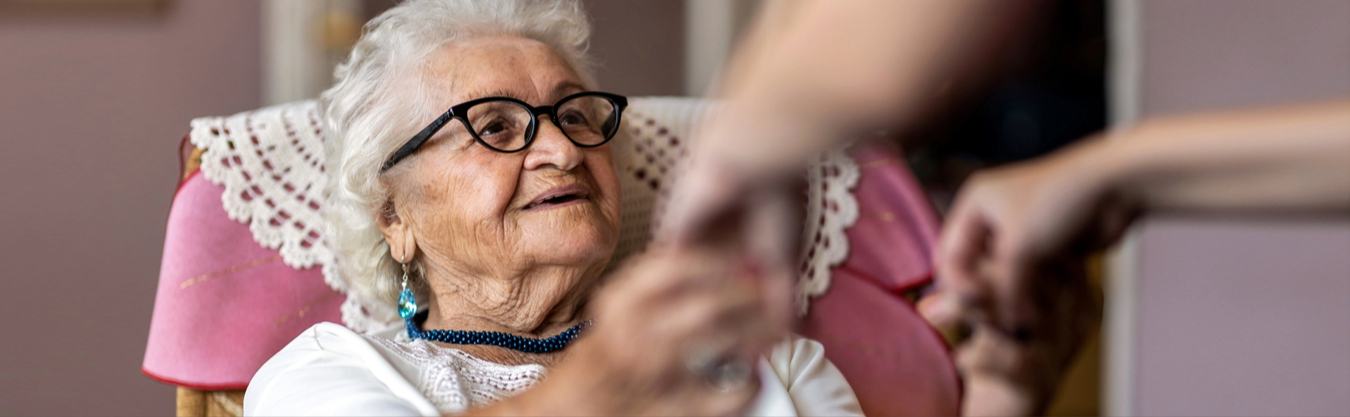
Counseling for Dementia Care Partners and Families of People with Dementia in Westchester, NY
Restore a sense of connection, steadiness, and meaning—through the uncertainty of dementia care.
When someone you love begins to change, it doesn’t happen all at once. It shows up in small moments at first. A forgotten name. A pause that lingers too long. A look of confusion where there used to be certainty.
Then one day, it becomes undeniable.
You leave an appointment with more questions than answers. You replay conversations in your head. You start to realize that your role in this relationship is shifting, and there’s no clear guide for what comes next.
Counseling for dementia care partners offers support in that in-between space—where love, grief, responsibility, and uncertainty all exist at once.

You don’t need to have everything figured out before reaching out. A conversation is a good place to start.
Why Dementia Care Feels So Hard
Caring for someone with dementia changes the rhythm of your life.
You might find yourself explaining the same thing multiple times in a single afternoon. You might notice your loved one becoming anxious in situations that used to feel routine. There are moments where connection is still there, followed by moments where it feels just out of reach.
It can be disorienting.
There’s also the emotional weight that comes with it. You may feel grief long before any actual loss. You may question whether you’re doing enough, or doing the right things. You may feel alone in ways that are difficult to explain to people who haven’t experienced it firsthand.
Over time, the pressure builds. Not just from the care itself, but from trying to hold everything together.
This is where support becomes essential—not as a last resort, but as a way to stay grounded while everything else is shifting.


What Counseling for Dementia Care Partners Looks Like
This work is not about fixing dementia. It’s about helping you navigate your role within it with more clarity, steadiness, and support.
In our sessions, we focus on what will actually help you in your day-to-day life:
- How to respond to confusion, anxiety, or behavioral changes in a way that reduces stress for both of you
- How to stay connected to your loved one, even as their condition changes
- How to process the grief, frustration, and emotional fatigue that often go unspoken
- How to develop practices that help you reset and stay grounded
We also use mindfulness and creative approaches to support emotional regulation and connection. These aren’t abstract ideas. They become practical tools you can return to, both on your own and in your interactions with your loved one.
Over time, many caregivers begin to notice something important. The situation may not be easier, but they feel more equipped within it.


Staying Connected in Changing Dementia Relationships
One of the most painful parts of dementia is the shift in relationship.
You may be caring for a parent who once cared for you. You may be supporting a partner who no longer remembers shared experiences. The dynamic changes, often without warning.
But connection doesn’t disappear. It changes form.
Through counseling, we work on ways to meet your loved one where they are, rather than where they used to be. This can reduce frustration and open the door to moments that still feel meaningful—sometimes even joyful.
Small moments matter here. A shared song. A calm interaction. A sense of ease, even briefly.
Those moments are not insignificant. They become part of how you carry this experience.

Counseling for Different Types of Care Partners
Not everyone arrives in the same role. Counseling is adapted to the kind of responsibility you’re holding.
For Family Members of Seniors with Dementia
If you’re caring for a parent, spouse, or close relative, the emotional layers are often complex.
There’s love, history, and a deep sense of responsibility. There may also be guilt, especially if you’re balancing caregiving with work, distance, or other family obligations.
In our work together, we focus on helping you:
- Feel more confident in how you care for your loved one
- Reduce the sense of isolation that often comes with this role
- Process anticipatory grief in a way that doesn’t overwhelm you
- Create moments of connection that feel genuine and meaningful
You don’t have to carry this alone. Support can give you both practical guidance and a place to process what you’re experiencing.
For Professional Dementia Care Partners
If you are a caregiver, aide, or professional working with individuals with dementia, your experience is different—but no less demanding.
You’re often navigating multiple clients, emotional fatigue, and the pressure to remain steady in situations that can be unpredictable.
Counseling offers space to:
- Reflect on challenging interactions and develop more effective responses
- Prevent burnout by building sustainable emotional practices
- Strengthen your ability to connect with clients in meaningful ways
- Reconnect with a sense of purpose in your work
Professional caregivers are expected to give a great deal of themselves. Having a place where you can recalibrate is not optional if you want to continue doing this work well.
A Different Kind of Dementia Care Partner Support at InVibe
At InVibe Creative Arts Therapy, counseling is not limited to conversation alone.
We integrate mindfulness and creative arts therapy, including music therapy, as part of the process. This allows for different ways of processing and connecting—especially when words feel insufficient or repetitive.
The goal is not to remove difficulty. It is to help you move through it with more support. That’s why Eric Lebowitz developed a proven framework that brings more awareness and develops simple practices to help you reset during difficult moments. The result? Experiencing small shifts in how you relate to both yourself and your loved one.
Meet Eric: Licensed Creative Arts Therapist & Board-Certified Music Therapist
InVibe Creative Arts Therapy is led by Eric Lebowitz, a Board-Certified Music Therapist (MT-BC) and Licensed Creative Arts Therapist (LCAT) with over a decade of experience working with seniors, caregivers, and families navigating dementia, grief, and life transitions.
Eric’s approach is grounded, practical, and human. Sessions are shaped around your experience, not a rigid structure. The work draws from clinical training, but it stays focused on what actually helps in real life.
This is a space where you can bring what’s difficult without needing to filter or simplify it. It’s also a space where moments of connection, creativity, and even lightness can exist alongside that difficulty.

Take a step toward support
Scheduling a brief consultation gives you the chance to ask questions, talk through your situation, and get a sense of whether this feels like the right fit.
You don’t need to commit to anything right away. Starting the conversation is enough.